Tunbridge Wells’s Period Wiring Specialists
Period-property wiring often conceals ageing VIR, rubber-insulated cable and earlier alterations that require careful investigation rather than assumptions about visible faults. We assess brittle insulation, earthing issues, poor joints and concealed routes, and give particular attention to aluminium upgrades with loosening connections and overheating risk. Before any remedial work or certification under Part P, we plan fault-finding to respect original fabric and access limitations.
Our services
Every job we carry out in Harrogate includes safety checks tailored to those property types, clear fault-finding specific to local wiring arrangements and a fixed written price before we start. Where required for Harrogate properties, we’ll issue an Electrical Installation Certificate or Minor Works Certificate and notify notifiable work under Part P to Harrogate Borough Council’s building control.
- Safety testing and written quotations specific to Harrogate property types and ages
- Certificates and Part P notification to Harrogate building control where applicable
The jobs we are called for most
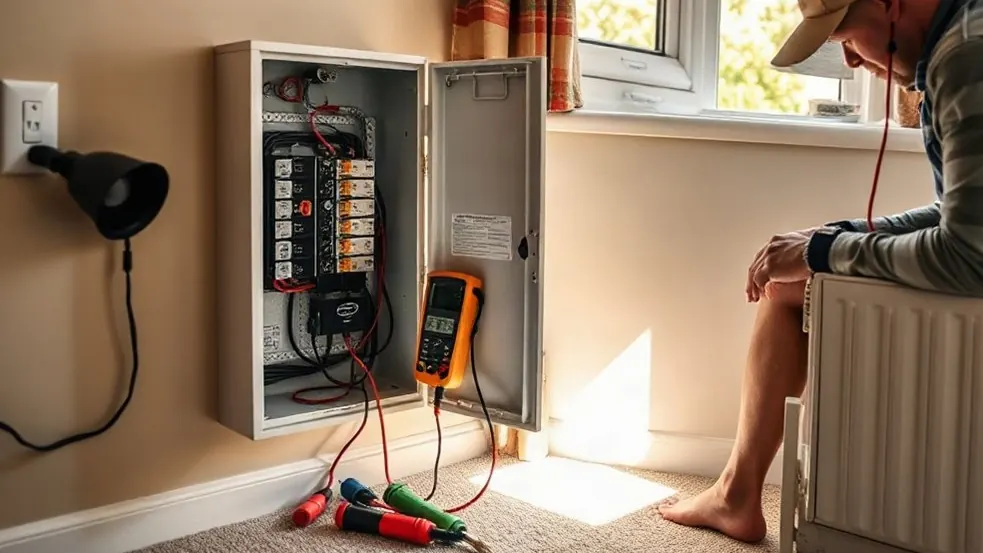
Most calls we attend in Tunbridge Wells involve fault-finding, consumer unit issues, additional sockets, lighting upgrades and electrical safety checks. We trace tripping circuits, dead sockets and partial power loss safely, identifying whether the cause is an appliance, damaged cable, moisture ingress or an overloaded circuit.
We also replace old fuseboxes where protection is no longer suitable, assess damp sockets after leaks or flooding, and upgrade lighting where fittings, wiring or switching arrangements raise concerns. In Victorian properties, we’re alert to ageing rubber or VIR cable; on post-war estates, aluminium wiring may require particular attention. For extensions, home offices and kitchens, we install additional sockets and lighting circuits designed for the expected load. Where work falls within Part P requirements, we make sure it is completed and certified in line with current electrical safety standards.
What is included in every job
Every job starts with a clear assessment of the fault or installation, followed by a written fixed price before work begins. We isolate circuits where necessary, test methodically and identify the underlying cause rather than simply resetting a tripped consumer unit or replacing a socket without investigation.
Our work includes appropriate safety checks, verification of protective devices, earthing and bonding where relevant, and checks that repairs suit the existing installation and current requirements. We explain what we’ve found in plain English, outline your options and only proceed with your approval.
We carry commonly needed spare parts for straightforward repairs, helping us restore power or safe operation without unnecessary delay. If a component needs ordering, we’ll make the area safe, advise you clearly and arrange the return visit. We also leave your property tidy.
Certificates and notification
Once the work’s complete, we provide the appropriate electrical certification for the job and explain any Part P notification requirements. Minor repairs may need a Minor Electrical Installation Works Certificate, while new circuits, consumer unit changes and more substantial alterations may require an Electrical Installation Certificate. We’ll confirm what applies before work begins.
As NICEIC-approved, Part P-registered electricians, we follow the correct notification process where work is notifiable. This helps demonstrate that installations have been tested, fault findings have been addressed and safety measures meet current requirements. We also explain certificate timelines, including when you should receive your paperwork and any Building Regulations compliance certificate. Keep these documents with your property records; they’re useful for future EICRs, alterations, insurance queries and proving compliant work.
What it costs
We provide fixed electrical prices in writing before work starts so you know the cost up front; emergency out-of-hours work is £120 per hour (first-hour minimum). Our fault-finding protects you from unsafe circuits and supports energy efficiency.
| Job | Price | What's included |
|---|---|---|
| Fault finding | £80/hr | Testing, labour, VAT |
| EICR, up to 3-bed | £150–£250 | Inspection, report, certificate |
| Consumer unit replacement | £500–£700 | Parts, installation, testing, certificate |
| Extra socket | £55–£75 | Parts, labour, testing, VAT |
Prices do not include plaster repairs, decoration, asbestos removal, DNO supply-upgrade charges, scaffolding or access equipment.
How long each job takes
Most minor repairs are completed on the first visit, while fault-finding can take longer where circuits need safe isolation and testing to identify the cause. We’ll never rush live-work decisions: testing, verification and compliant reinstatement come first.
| Job | Typical durations | What we check |
|---|---|---|
| Dead socket | 1–2 hours | Circuit continuity and connections |
| Tripping consumer unit | 2–4 hours | Insulation resistance and appliance faults |
| Partial power loss | 2–6 hours | Protective devices, cables and terminals |
For an emergency response, we prioritise making the installation safe, then trace the defect methodically. Replacement parts, concealed cable damage or multiple faults can extend the visit. Once repairs are complete, we test the affected circuit and provide the appropriate certification where required. If further work is needed, we’ll explain the findings and timescale before proceeding.
Property types we work on around Tunbridge Wells
After identifying and repairing the fault, we consider the age and construction of your Tunbridge Wells property, because wiring and the safest repair method can differ between local neighbourhoods.
In Victorian terraces around High Brooms and Tunbridge Wells town centre — many houses here date from the mid- to late‑19th century — we regularly encounter older VIR or rubber‑insulated cables, limited earthing arrangements and circuits that have been altered over time; these features often require careful investigation before any repair. When attending listed or other period properties in areas like Hawkenbury and the conservation zones near Sherwood — many of which date from the 18th and 19th centuries — we carry out sympathetic work that complies with current regulations and preserves historic fabric where possible.
Whatever the Tunbridge Wells neighbourhood and property age, we test the relevant circuits on site, confirm that the local protective devices operate correctly and select materials and methods suitable for the particular streets and house types we are working on.
Certificates you will receive
For electrical repairs in Tunbridge Wells, we will provide the appropriate paperwork for the work completed: typically a Minor Electrical Installation Works Certificate for an addition or alteration to an existing circuit, or an Electrical Installation Certificate (EIC) where a new circuit or consumer unit has been installed.
Where work is notifiable under Part P (for example a new circuit, consumer‑unit replacement or some work in a bathroom), we self‑certify and notify Building Control as NICEIC‑approved, Part P‑registered contractors; you will receive confirmation that the notified work has been tested and was found to comply with the applicable safety standards at the time of inspection. An EICR is not a certificate of new work: it reports the condition of an existing installation and records any defects or recommendations. Keep all documents with your electrical warranties; they are useful for future contractor checks, property records and safe alterations.
Areas we cover from Tunbridge Wells
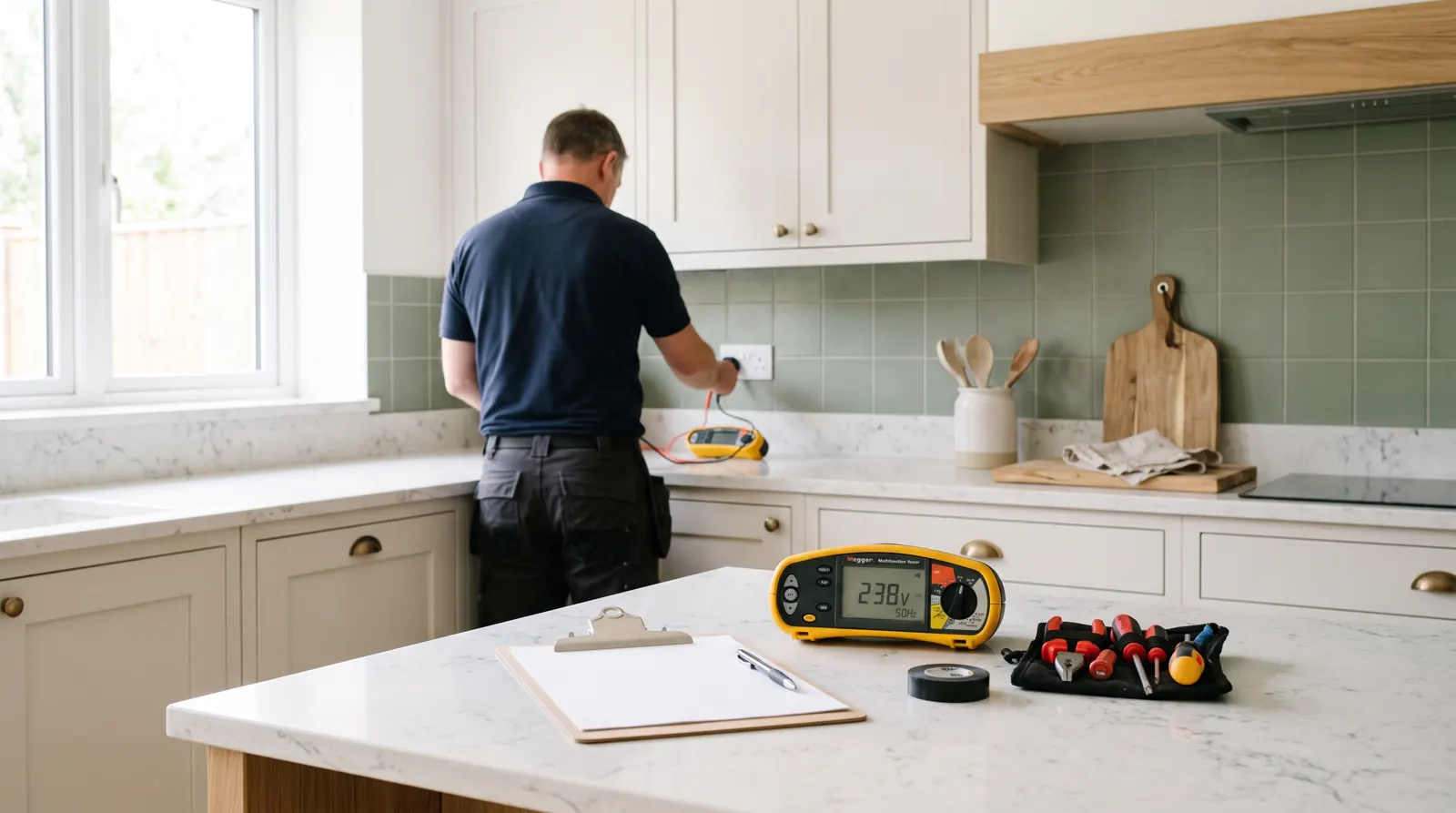
Based at Regus Tunbridge Wells - Pluto House in TN1, we cover electrical repairs across Tunbridge Wells town and the surrounding Tunbridge Wells borough, specifically including Southborough village, Rusthall, High Brooms, Sherwood and Hawkenbury. We travel to addresses in these named places, bringing test equipment such as insulation resistance testers and portable appliance testers to trace faults safely in homes, private rentals and business premises within the Tunbridge Wells area.
On Rusthall and the nearby residential streets north of the town centre we commonly inspect inter‑war semi‑detached houses built in the 1920s–1930s for deteriorating fuse boxes and to confirm ring main integrity. In High Brooms we see a mix of 19th‑century mill workers’ houses and post‑war 1950s–1960s terraces facing potential older rubber‑insulated or VIR cabling issues that need testing.
Travel times to locations such as Southborough, Rusthall, High Brooms, Sherwood and Hawkenbury vary with Tunbridge Wells traffic and our current call volume, and we confirm attendance times when you contact us. For urgent issues within these Tunbridge Wells neighbourhoods — including complete loss of power at a property in the town centre, burning smells reported from an socket in Hawkenbury, or repeated tripping on a circuit in Sherwood — isolate the affected circuit where it is safe to do so and call our Tunbridge Wells emergency line. All work we carry out in Southborough, Rusthall, High Brooms, Sherwood and Hawkenbury is completed in line with current UK regulations and local building considerations for those specific areas.